
WELCOME BONUS 200%
UP TO €1500 + 200
FREE SPINS
UP TO €1500 + 200
FREE SPINS
Home → Blackjack
Blackjack at Billybets: Variants, Rules and Payouts
Perfect Pairs vs 21+3 in House Edge
The side bet named Any Pair is available at the Infinite Blackjack table operated by Evolution. This specific wager carries a house edge of approximately 9.64%, which is significantly higher than the main game RTP of 99.47%. Players betting on pairs face a much steeper long-term loss compared to standard blackjack hands.
Another popular option is the 21+3 side bet, also offered by Evolution at this live dealer venue. While the exact house edge varies, it generally sits around 2.64% for most combinations. This figure is still worse than the base game but better than many other casino wagers found online.
Comparing these two options reveals a clear hierarchy of risk for high rollers seeking value. The main game RTP of 99.47% remains the safest path for bankroll preservation. Side bets like Any Pair and 21+3 should be treated as entertainment expenses rather than strategic plays for serious players.
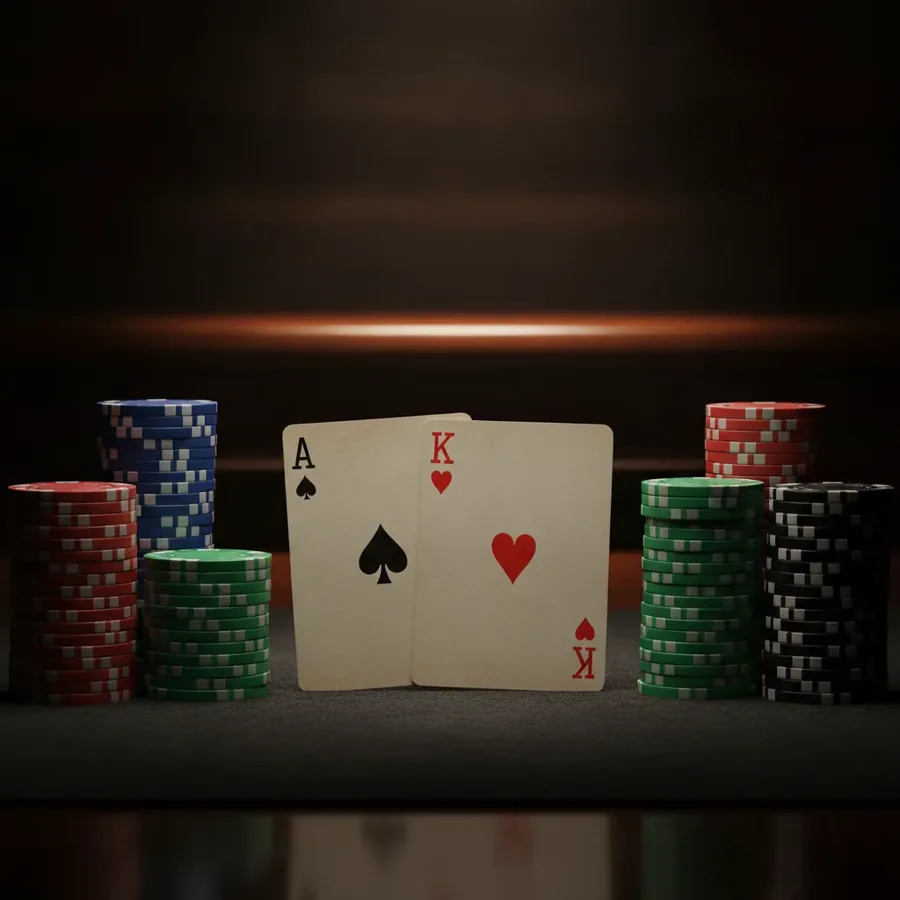
Soft Hand and Hard Hand Practically Distinguished
The distinction between a soft hand containing an Ace and a hard hand without it dictates the optimal move for high rollers seeking to minimize the house edge on blackjack tables. A soft hand allows the player to draw additional cards without immediate risk of busting, whereas a hard hand requires strict adherence to basic strategy to avoid exceeding twenty-one points during the session.
Infinite Blackjack offers an RTP of 99.47% while Lightning Blackjack provides 99.56%, both requiring players to master these hand types to maximize returns on bets ranging from 1 EUR to 5.000 EUR or 2.500 EUR respectively. The specific rules regarding doubling after split and hitting soft seventeen directly impact the long-term expected value for every wager placed at these live dealer tables throughout the night.
Understanding that the dealer hits on soft seventeen increases the casino advantage by 0.22 percentage points compels serious players to adjust their betting patterns accordingly when facing this specific rule set. High stakes participants must calculate the exact probability of improving their total against the dealer's upcard to ensure their bankroll remains stable over thousands of hands played at Evolution venues.
Live Table vs RNG Table: Speed and Limits
Evolution Infinite Blackjack accommodates unlimited seats with betting limits spanning from 1 EUR to 5.000 EUR, providing a significantly higher ceiling for high rollers compared to standard RNG versions found in digital libraries. This flexibility allows wealthy players to place substantial wagers without encountering table maximums that would otherwise restrict their ability to execute large-scale betting strategies during peak hours at the casino platform.
Lightning Blackjack introduces multipliers up to 25x on winning hands but maintains lower stake limits between 1 EUR and 2.500 EUR, creating a distinct risk-reward profile different from the pure skill-based infinite variant. Players must weigh the potential for explosive payouts against the reduced maximum bet size to determine which game format best suits their current bankroll management objectives and volatility preferences.
Blackjack Party operates with a narrower range of 1,00 EUR to 1.000 EUR and features two moderators to create a party atmosphere, appealing to those who prefer social interaction alongside moderate stakes. The presence of side bets like Any Pair and 21+3 adds complexity to the decision-making process, requiring high rollers to analyze the separate RTP implications of each optional wager before placing chips.
What Push Means: Stake Returns to You
A push occurs when the player and dealer finish with identical totals, resulting in the return of the original stake without any win or loss, a fundamental mechanic in all blackjack variants including those offered by Billybets. This outcome preserves the bankroll integrity for high rollers by ensuring that tied hands do not erode funds, allowing players to continue their session with the same capital they started with at the table.
In games like Liberal Vegas Strip where the house edge is only 0.28%, pushes are frequent enough to significantly influence the overall return to player percentage of 99.72% over extended play sessions. Understanding this mechanic helps players recognize that not every hand results in a decisive financial movement, which is crucial for managing expectations and maintaining discipline during long periods of gameplay at high-stakes tables.
Insurance bets paying 2:1 are often mistaken as a hedge against pushes, but they actually represent a separate side wager with a much higher house edge of 7.47% that should generally be avoided by optimal strategists. Accepting insurance does not prevent a push on the main bet; it merely creates a secondary transaction that statistically reduces the overall profitability of the session for anyone not counting cards effectively.
Stand-on-17 Rule and Its Meaning for Players
When the dealer stands on soft seventeen, known as S17, the house edge decreases by approximately 0.22 percentage points compared to rules requiring the dealer to hit soft seventeen in six-deck games. This rule variation is critical for high rollers playing Blackjack 6 Decks with S17, DAS, and DOA, which yields a favorable RTP of 99.54% and a low house advantage of just 0.46%.
Blackjack Split / Double / H17 variants explicitly note that the dealer hitting soft seventeen worsens the RTP by adding 0.22 percentage points to the casino's mathematical advantage over the player base. Savvy players seeking the best odds will actively seek out tables offering the stand-on-17 rule to capitalize on the improved statistical outlook provided by this specific configuration of game parameters.
Liberal Vegas Strip combines the stand-on-17 rule with double after split and resplitting capabilities to achieve one of the most favorable conditions available, resulting in a mere 0.28% house edge. This combination allows high rollers to exploit optimal basic strategy more effectively, minimizing losses and maximizing the potential for significant wins during their visits to the live dealer section.
Blackjack variants at a glance
| Variant | Payout | House edge | Rule | Bet range |
|---|---|---|---|---|
| Blackjack Split / Double / H17 – Regel-Effekte | n.a. (Regel-Modifikatoren) | H17 +0.22 Prozentpunkte; RSA −0.08 Prozentpunkte; DAS −0.14 Prozentpunkte | Dealer Hits Soft 17 verschlechtert RTP um 0.22 Prozentpunkte; Resplit Aces verbessert um 0.08 Prozentpunkte; Double After Split verbessert um ca. 0.14 Prozentpunkte; 6 Decks statt 8 – ca. 0.02 Prozentpunkte. | Double – Einsatz ×2 mit einer Karte; Split – bis 4 Hände; Ass-Split meist mit einer Karte. |
| Blackjack Auszahlung 6:5 statt 3:2 (6 Decks) | 98.15% | 1.85% | Ersatz von 3:2 durch 6:5 fügt exakt +1.39 Prozentpunkte zum Vorteil des Casinos hinzu – stärker als jede andere Regeländerung. Bei $10 Einsatz zahlt Blackjack $12 statt $15. | Blackjack 6:5, Gewinn 1:1 |
| Blackjack Liberal Vegas Strip (liberale Regeln, 3:2) | 99.72% | 0.28% | Günstigste Regelkombination: S17 + DAS + Resplit + Late Surrender. Standardabweichung 1,15 | Blackjack 3:2, Gewinn 1:1 |
| Blackjack Surrender (Late Surrender) – Regel-Effekt | n.a. (Regel-Modifikator) | −0.08 Prozentpunkte | Spieler gibt Hand nach Dealer-Blackjack-Prüfung auf, verliert die Hälfte des Einsatzes. Verbessert RTP um ca. 0.08 Prozentpunkte. Early Surrender ist wesentlich wertvoller (bis −0.6 Prozentpunkte), aber extrem selten. | Rückzahlung 50% des Einsatzes |
| Blackjack 6 Decks, S17, DAS, DOA, Auszahlung 3:2, Basisstrategie | 99.54% | 0.46% | Dealer steht auf Soft 17; Verdopplung auf jeder Zweierkarte; Verdopplung nach Split erlaubt; keine Aufgabe. Basisstrategie ist für diesen Wert zwingend | Blackjack 3:2, normaler Gewinn 1:1, Insurance 2:1 |
| Blackjack Insurance / Versicherung (6–8 Decks) | 92.53% | 7.47% | Separate Nebenwette bis 50% der Hauptwette, wenn der Dealer ein Ass hat. Basisstrategie schreibt IMMER Ablehnung vor (außer Karten zählen bei True Count ≥ +3). Bei einem Deck Vorteil ≈ 5.88% | Insurance 2:1 |
How many decks are in the shoe?
Using six decks instead of eight reduces the house edge by approximately 0.02 percentage points, a subtle but valuable improvement for high rollers who play thousands of hands per session at Billybets. This reduction in deck count lowers the effectiveness of card counting slightly less than single-deck games but still offers better odds than the traditional eight-deck shoes commonly found in other online casino offerings worldwide.
Single-deck blackjack typically offers the lowest house edge of 0.15% with an RTP of 99.85%, primarily because fewer cards in the shoe increase the predictability of future draws for strategic players. However, many single-deck games compensate for this advantage by paying only 6:5 for blackjack, which drastically inflates the house edge to 1.85% and negates the benefit of having fewer decks in circulation.
Insurance calculations in six-to-eight-deck games show a house edge of 7.47%, demonstrating how deck composition affects side bet profitability independent of the main game rules. High rollers must consider that while fewer decks improve the main game odds, they also alter the frequency of natural blackjacks and ten-value cards, impacting the variance and potential payout structures of their overall betting strategy.
How long do 100 EUR last at a 1 EUR table?
Infinite Blackjack offers a minimum bet of 1 EUR with a theoretical return to player percentage of 99.47 percent, allowing high rollers to extend their bankroll significantly during extended playing sessions without rapid depletion of funds or immediate risk of ruin.
The maximum stake limit for Infinite Blackjack is set at 5,000 EUR per hand, which provides ample room for aggressive betting strategies and large volume play while maintaining the same favorable house edge derived from standard rule variations available in this specific game variant.
With a base bet of 1 EUR, a player can execute exactly one hundred distinct hands before the initial 100 EUR budget is fully exhausted, assuming no wins occur during the session and each decision results in a complete loss of the placed wager amount.
Lightning Blackjack imposes a stricter maximum stake cap of 2,500 EUR, which may require high rollers to adjust their total session volume or split their bankroll across multiple tables to achieve similar overall turnover levels compared to the higher-limit infinite version.
Place Side Bet before cards are dealt
Infinite Blackjack allows players to place up to four side bets including Any Pair, 21+3, Hot 3, and Bust It before the initial deal occurs, providing additional wagering opportunities that operate independently of the main hand outcome but share the same dealer interaction rules.
The RTP for these side wagers varies significantly from the main game, often dropping well below the 99.47 percent baseline, which means high rollers placing consistent side bets face a substantially higher house edge that erodes their long-term expected value over thousands of hands played.
Insurance is another side option available when the dealer shows an Ace, paying out at 2:1 odds but carrying a steep house advantage of approximately 7.47 percent, making it a statistically poor choice for disciplined players who strictly adhere to basic strategy principles.
Early surrender is rarely offered in modern live formats, whereas late surrender improves the main game RTP by only 0.08 percentage points, so relying on side bets for profit generation remains mathematically inferior to mastering the primary blackjack decision tree.
Bonus Lost Due to 10 Percent Contribution
The 300 percent welcome bonus up to 2,000 EUR requires full wagering, yet table games like blackjack contribute only ten percent toward clearing these requirements, forcing players to generate massive volumes of action just to meet the standard forty times rollover condition effectively.
For every 100 EUR wagered on Infinite Blackjack, only 10 EUR counts toward the bonus clearance, meaning a player must bet a total of 8,000 EUR on tables to satisfy the equivalent contribution of a single 800 EUR slot spin that contributes one hundred percent.
This low contribution rate creates a severe mismatch for high rollers who prefer card games, as they will likely exhaust their 2,000 EUR bonus balance through normal variance long before fulfilling the turnover obligation, resulting in the permanent forfeiture of any remaining bonus funds.
Slots contribute one hundred percent to the wagering requirement, offering a much faster path to converting bonus credits into withdrawable cash, although this convenience comes with higher volatility risks that can deplete the bonus balance rapidly compared to the steady erosion seen in table games.
Bust at 22: Stake Lost Immediately
Standard blackjack rules dictate that any hand exceeding twenty-one points results in an immediate loss of the entire stake, a fundamental mechanic that applies uniformly across all variants including Infinite Blackjack and Lightning Blackjack regardless of the specific payout structure or side bet options available.
Resplitting Aces is permitted in liberal versions, improving the RTP by 0.08 percentage points, but this rule does not protect against busting if the subsequent hit cards push the total value beyond the critical twenty-one threshold, leading to an automatic settlement against the player.
The house edge of 0.46 percent for Blackjack 6 Decks assumes perfect basic strategy usage, yet even optimal play cannot prevent busts; statistical variance ensures that losing hands will occur frequently, requiring strict bankroll management to sustain long-term viability at high stakes.
Insurance payouts of 2:1 offer temporary relief when the dealer has an Ace, but this side bet carries a 7.47 percent house edge, meaning consistent insurance taking will accelerate bankroll depletion far more quickly than occasional busts during the main gameplay loop.
Register Late Surrender correctly in three steps
Late surrender allows players to forfeit half their bet after the dealer checks for blackjack, reducing the house edge by 0.08 percentage points and improving the overall RTP from 99.54 percent to approximately 99.62 percent for those who utilize this option correctly.
The first step involves waiting for the dealer to reveal their hole card and confirm no natural blackjack exists, ensuring that the surrender option remains valid and preventing premature forfeiture of chips in situations where the player might have otherwise won the full hand.
Players must then clearly signal their intent to surrender before making any other moves like hitting or standing, as delaying this declaration invalidates the right to use the rule, potentially costing them fifty percent of the original wager unnecessarily due to procedural errors.
Although late surrender yields only a modest 0.08 point improvement, early surrender could reduce the house edge by up to 0.60 percentage points, making it a significantly more valuable tool for high rollers whenever it becomes available in rare game variants.
Contact
Live - online chat
Banking









Providers












Billybets 2024