
WELCOME BONUS 200%
UP TO €1500 + 200
FREE SPINS
UP TO €1500 + 200
FREE SPINS
Home → Roulette
Roulette at Billybets
How Much Balance Covers 50 Rounds?
The Lightning Roulette table at Billybets allows stakes from 0,20 EUR up to 5.000 EUR per spin, providing ample flexibility for high rollers who wish to place significant wagers on each round without hitting immediate limits during their session.
With a house edge of 2.70% and an RTP of 97.30%, the expected loss per single straight bet is calculated by multiplying the stake by the edge factor, meaning a 100 EUR wager statistically yields a 2.70 EUR reduction in total bankroll over time.
To cover fifty rounds with a comfortable buffer against variance, a player should secure a balance exceeding 5.000 EUR, which matches the maximum table limit and ensures sufficient funds to withstand losing streaks while still having room for strategic increases.
Live tables hosted by Evolution operate within these specific betting brackets, allowing players to utilize multipliers ranging from 50x to 500x on selected numbers without altering the fundamental base RTP or the standard payout structure for regular bets.
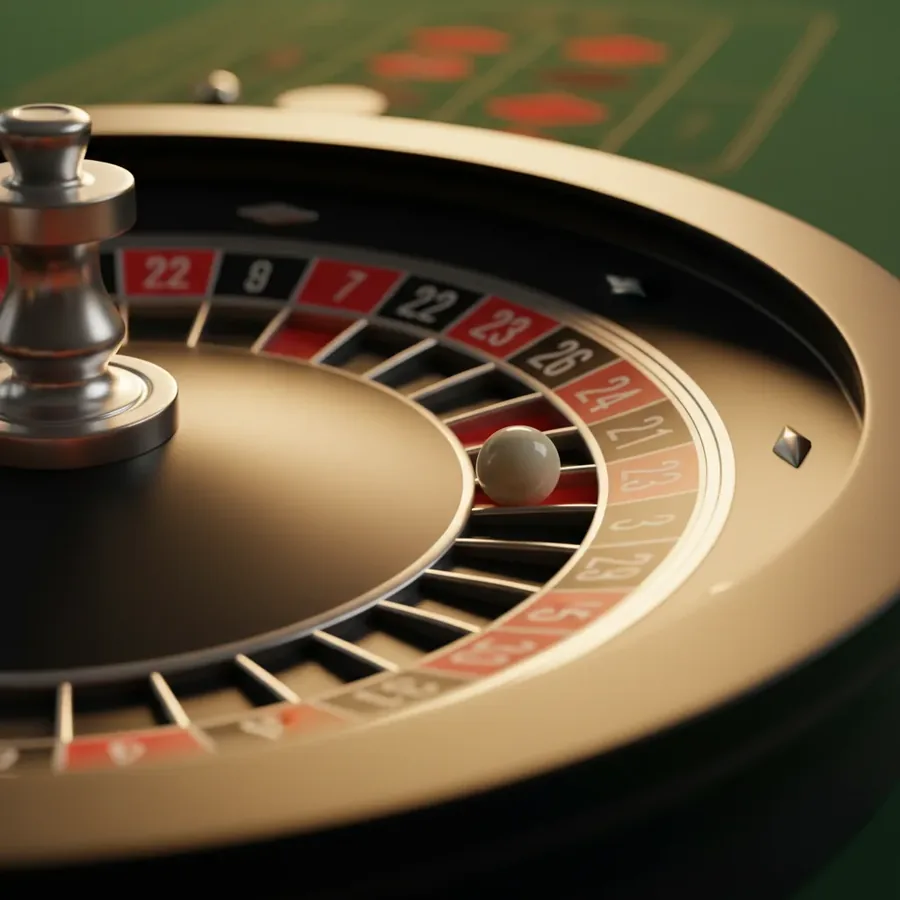
Mistake: Choosing American Wheel with 5.26 Percent
The American Roulette variant features thirty-eight sectors including both a single zero and a double zero, which significantly alters the probability landscape compared to European wheels that only contain thirty-seven sectors with a single zero pocket.
This additional double zero sector doubles the house advantage to 5.26%, resulting in an RTP of 94.74% which is substantially lower than the 97.30% found on European and French variants, making it a costly choice for serious high rollers seeking optimal value.
A Straight bet on the American wheel pays 35:1 regardless of the extra zero, but the presence of the 00 pocket means the true odds are 37:1 against winning, creating a mathematical disadvantage that erodes bankrolls much faster than other available games.
Players should avoid the Five Number Bet which covers 0, 00, 1, 2, and 3, as this specific wager carries a disastrous 7.89% house edge and an RTP of only 92.11%, representing the worst possible outcome on the entire American layout.
Error: Expecting La Partage at the Wrong Table
French Roulette tables at Billybets often feature the La Partage rule, which refunds half the stake on even money bets when the ball lands on zero, thereby reducing the house edge on those specific wagers to a highly favorable 1.35%.
However, this beneficial rule applies exclusively to even chance bets such as Red/Black or Odd/Even and does not extend to inside bets like Straights or Splits, meaning players expecting full table protection will face the standard 2.70% edge on corner wagers.
The Blaze Roulette game by Authentic Gaming utilizes a standard European wheel with thirty-seven sectors and lacks the La Partage mechanism entirely, forcing all players to accept the full 2.70% house edge on every single spin without any partial refund options.
Quantum Roulette Live by Playtech also operates on a thirty-seven sector wheel with a 97.30% RTP but introduces quantum multipliers instead of refund rules, so players must rely on luck for multipliers rather than statistical safety nets for their base stakes.
La Partage Applies Only to Even Chances
Inside bets such as a Straight paying 35:1 or a Split paying 17:1 remain completely unaffected by the La Partage rule in French Roulette, meaning a full loss occurs whenever the ball lands on the green zero pocket during play.
Even money propositions like Red/Black or Low/High receive a 50% stake return upon hitting zero, effectively halving the house edge on these specific outcomes while maintaining the standard 1:1 payout ratio for all winning non-zero results across the table.
The distinction between inside and outside bets determines whether a player benefits from the reduced 1.35% edge or suffers the standard 2.70% edge, requiring high rollers to carefully select their wager types to maximize long-term retention rates.
Street bets paying 11:1 and Corner bets paying 8:1 offer higher nominal returns but carry no protective mechanisms against the zero, ensuring that the mathematical advantage remains firmly with the casino unless the player restricts themselves to even chance markets.
36 Instead of 37: The Math Behind 35:1
The payout of 35:1 for a Straight bet appears generous because it mirrors the odds of a thirty-six number wheel, yet the actual wheel contains thirty-seven sectors, introducing the zero pocket that creates the casino's inherent mathematical advantage on every spin.
This discrepancy between the payout ratio and the true probability generates a 2.70% house edge on European and French wheels, whereas American wheels with thirty-eight sectors maintain the same 35:1 payout but suffer a doubled edge of 5.26% due to the extra double zero.
High rollers analyzing the Blaze Roulette table must recognize that the 35:1 payout for a correct prediction is identical to standard European rules, but the absence of special protections means the 2.70% edge applies uniformly across all thirty-seven possible outcomes.
Understanding that the payout ignores the zero pocket reveals why the RTP settles at 97.30% rather than 100%, confirming that the 35:1 figure is a marketing simplification that masks the true cost of playing roulette over thousands of spins.
Roulette bet types at a glance
| Bet | Payout | Win Chance | Numbers Covered | House Edge |
|---|---|---|---|---|
| Roulette Französisch mit La Partage (gerade Chancen) | Rot/Schwarz 1:1 (bei 0 Rückerstattung 50%), Odd/Even 1:1, Low/High 1:1; Innere Einsätze ohne La Partage: Straight 35:1, Split 17:1, Street 11:1, Corner 8:1 | 98.65% | Bei 0 wird die Hälfte des Einsatzes auf gerade Chancen zurückerstattet (Rot/Schwarz, Pair/Impair, Manque/Passe). En Prison gibt denselben 1,35%. Regel gilt NUR für gleiche Einsätze | 1.35% |
| Roulette Europäisch (einfache Null, 37 Sektoren) | Straight 35:1, Split 17:1, Street 11:1, Corner 8:1, Six Line 5:1, Dozen 2:1, Column 2:1, Rot/Schwarz 1:1, Odd/Even 1:1, 1-18/19-36 1:1 | 97.30% | 37 Sektoren (1–36 + 0); Auszahlungen wie für 36 Sektoren – daher konstanter Edge auf ALLE Wetten | 2.70% |
| Roulette Amerikanisch – Five Number Bet (0, 00, 1, 2, 3) | Five Number 6:1 (deckt 5 von 38 Sektoren) | 92.11% | Einzige Wette am amerikanischen Rad mit Edge über 5,26% – „Fallenwette“. Kein Äquivalent am europäischen Rad | 7.89% |
| Roulette Amerikanisch (doppelte Null, 38 Sektoren) | Straight 35:1, Split 17:1, Street 11:1, Corner 8:1, Six Line 5:1, Dozen 2:1, Column 2:1, Rot/Schwarz 1:1 | 94.74% | 38 Sektoren (1–36 + 0 + 00); Auszahlungen wie beim europäischen Rad, aber der zusätzliche Sektor verdoppelt den Hausvorteil | 5.26% |
| Roulette Französisch, innere Einsätze (La Partage gilt nicht) | Straight 35:1, Split 17:1, Street 11:1, Corner 8:1, Six Line 5:1, Dozen 2:1, Column 2:1 | 97.30% | Rad gleich (37 Sektoren), aber La Partage/En Prison gilt nicht für innere Einsätze – Edge bleibt europäisch | 2.70% |
Which Tables are Blocked with Active Bonus?
The 300% welcome bonus up to €2,000 plus 100 free spins creates specific wagering constraints for high stakes players. Table games contribute only 10% toward the bonus turnover requirement, significantly slowing the clearance process compared to slots. This low contribution rate means a €2,000 bonus requires €40,000 in eligible bets, making roulette a costly path to withdrawal.
Lightning Roulette from Evolution allows stakes between 0.20 and 5,000 EUR while remaining eligible for the 10% contribution rule. Players can place maximum bets at this table without triggering a block, provided they accept the reduced progress on wagering. The 97.30% RTP applies here, but the bonus conversion efficiency remains strictly limited by the 10% factor.
Blaze Roulette by Authentic Gaming also permits wagers up to 5,000 EUR under the same 10% contribution framework. Since the house edge is 2.70%, the expected loss during the required turnover calculation is substantial for high rollers. Quantum Roulette Live from Playtech follows identical rules, allowing bets from 0.10 to 5,000 EUR with the same penalty.
Distribute 500 Euro Bankroll at the Lightning Table
A 500 Euro bankroll at Lightning Roulette faces immediate pressure from Evolution's 50x-500x multipliers on 1-5 lightning numbers. These multipliers apply to straight bets, potentially turning a 35:1 payout into a much larger sum if a lucky number is struck. However, the base RTP of 97.30% indicates a 2.70% house edge that will erode the stake over time.
Placing a single straight bet of 10 Euros uses 2% of the total 500 Euro bankroll, allowing for 50 initial spins before depletion. If no multiplier hits, the player loses an average of 0.27 Euros per spin based on the 2.70% house edge. This slow bleed requires careful bankroll management to sustain play through the mandatory bonus turnover requirements.
The max payout cap of 35:1 for standard wins limits the recovery potential after a losing streak at the 5,000 EUR limit table. With a 500 Euro starting fund, chasing large wins via multipliers becomes statistically unlikely despite the 500x upside. The player must balance the risk of rapid depletion against the low 10% contribution rate toward the 300% bonus.
Place Chip Until Rien ne va plus
Rien ne va plus marks the end of betting when the croupier declares no more wagers are allowed on the current spin. At Blaze Roulette by Authentic Gaming, this phase occurs before the ball settles on one of the 37 European sectors. The live host manages this timing between 19:00 and 01:00 CEST, ensuring a steady pace for high volume betting.
European wheels feature 37 sectors with a consistent 2.70% house edge across all bet types, including straight and split wagers. A straight bet pays 35:1, while a split pays 17:1, reflecting the probability of hitting two specific numbers. The absence of a double zero keeps the edge lower than American variants, preserving more of the 500 Euro bankroll.
High rollers often use the 'rien ne va plus' moment to assess their position before the next spin begins. With Blaze Roulette offering a max payout of 35:1, large chips placed just before the call yield fixed returns regardless of future volatility. This predictability suits players managing strict bankrolls who need to calculate exact exposure before each round closes.
European or American: Which Wheel Pays Better
The European wheel contains 37 sectors and maintains a constant 2.70% house edge on all bets, from red/black to straight numbers. In contrast, the American wheel adds a double zero, creating 38 sectors and doubling the house advantage to 5.26%. This structural difference makes the European variant mathematically superior for any player seeking to preserve capital.
American Roulette offers a unique Five Number Bet covering 0, 00, 1, 2, and 3, which carries a disastrous 7.89% house edge. This specific wager has an RTP of only 92.11%, making it the worst option on either wheel type. High rollers avoiding this trap should stick to standard even-money or inside bets where the edge is clearly defined.
French Roulette introduces La Partage for even-money bets, reducing the house edge to just 1.35% when zero appears. This rule refunds half the stake on red/black or odd/even losses, effectively halving the disadvantage compared to standard European play. For high stakes, this 1.35% edge preserves significantly more value than the 2.70% or 5.26% alternatives found elsewhere.
How the Random Generator Maps 37 Pockets
Digital roulette RNGs map 37 pockets by assigning a unique numerical range to each sector on the virtual wheel. Each spin generates a random number that corresponds to one of these 37 positions, ensuring a uniform distribution over millions of trials. The resulting RTP of 97.30% reflects this precise mathematical mapping of probabilities to payouts.
Live dealer tables like Quantum Roulette from Playtech use physical wheels but apply digital multipliers to 1-5 random numbers. These quantum multipliers can reach up to 500x, altering the payout structure for specific straight bets without changing the underlying 37-pocket geometry. The base game still adheres to the 2.70% house edge, with multipliers acting as volatile bonuses.
The mapping process ensures that every pocket, from 0 to 36, has an equal chance of being selected in each independent spin. This independence prevents pattern recognition strategies from gaining an edge, as previous results do not influence future outcomes. High rollers relying on statistical analysis must account for this randomness when planning their betting sequences.
How Long is a Lightning Roulette Round?
The duration of a Lightning Roulette round by Evolution is determined by the betting window and the spin cycle, which typically lasts between fifteen and twenty seconds per event. This rapid pace allows high rollers to execute multiple wagers on Straight bets paying 35:1 within a short timeframe compared to slower table games. The total turnover potential increases significantly as players can place higher stakes repeatedly without long delays between decisions. A quick calculation shows that twenty spins per hour at 500 EUR stake equals 10,000 EUR in handled volume.
Evolution provides multipliers ranging from x50 to x500 on one to five Lightning numbers, adding volatility to the standard European wheel with thirty-seven sectors. These special payouts occur alongside regular bets like Split wagers at 17:1, creating a hybrid risk profile for aggressive bettors. The presence of these multipliers means that a single winning ticket can yield substantial returns beyond the base house edge of 2.70 percent. Players must decide if the chance for a x500 payout justifies the reduced probability of hitting a specific number on the wheel.
The betting limit for Lightning Roulette extends up to 5,000 EUR per spin, accommodating the large bankrolls typical of VIP players seeking high-variance outcomes. This maximum stake applies equally to outside bets such as Red/Black at 1:1 and inside bets like Corners at 8:1. The combination of high limits and potential multipliers creates a unique environment where variance is managed through capital rather than strategy. Consequently, a player risking 5,000 EUR on a straight number faces a significant swing regardless of the multiplier outcome.
Only 10 Percent Contribution: What are the Consequences?
Tischspiele contribute only ten percent toward the wagering requirement of the 300% welcome bonus up to 2,000 EUR plus 100 free spins offered by Billybets. This low contribution rate drastically reduces the effectiveness of roulette play in clearing the bonus funds compared to slots which usually contribute fully. For every 100 EUR wagered on a game like Blaze Roulette, only 10 EUR counts toward the mandatory turnover target set by the casino. This mechanism forces players to either accept a much longer clearing period or focus their activity on other eligible games.
,Authentic Gaming's Blaze Roulette operates under these same restrictive terms, meaning that even with a favorable house edge of 2.70 percent, progress on the bonus is slow. A high roller placing 10,000 EUR in total bets would only generate 1,000 EUR of credited value against the requirement. If the bonus amount is 2,000 EUR with a forty-times wagering condition, the player needs 80,000 EUR in eligible turnover. The limited contribution makes achieving this threshold through table games alone mathematically inefficient for most strategies.
,Playtech's Quantum Roulette Live also falls under the ten percent rule, impacting how high stakes affect the bonus clearance timeline. With limits reaching 5,000 EUR per round, the monetary volume generated is high, but the credited amount remains capped by the percentage. This discrepancy creates a hidden cost for players attempting to unlock the full 2,000 EUR bonus through live dealer tables. The financial impact is severe, as it requires ten times more actual betting volume to satisfy the same obligation compared to higher-contribution categories.
D'Alembert and Fibonacci Against the Same Table Limit
The D'Alembert system involves increasing the stake by one unit after a loss and decreasing it by one unit after a win, relying on the assumption of eventual equilibrium. On a European wheel with thirty-seven sectors and a 2.70 percent house edge, this progression aims to recover losses gradually over many spins. High rollers using this method must ensure their bankroll can withstand extended losing streaks while staying within the 5,000 EUR maximum bet limit. The system performs poorly when the house edge prevents the expected return from materializing in the short term.
,The Fibonacci sequence follows a stricter mathematical progression where each stake is the sum of the two preceding ones, requiring a deeper reserve than D'Alembert. When applied to Straight bets paying 35:1 on Evolution's Lightning Roulette, the recovery phase becomes lengthy due to the exponential growth of required units. A player starting at 10 EUR might reach the 5,000 EUR table limit before successfully completing a full cycle of wins and losses. This constraint effectively neutralizes the theoretical advantage of the progression for those operating near the maximum stake.
,Both systems face the same structural barrier: the fifty-two-six percent house edge on American wheels makes them particularly dangerous for high-volume players. Even on the European variant with a lower 2.70 percent edge, the negative expectation ensures that long-term application leads to net losses. The 5,000 EUR cap acts as a hard stop, preventing the infinite progression assumed by these theories. Consequently, the mathematical flaw in expecting profit from these strategies is exposed by the finite limits and fixed odds.
Minimum and Maximum Bets Limit Every Martingale
The Martingale strategy demands doubling the stake after every loss on even-money bets like Red/Black which pay 1:1, assuming a win will recoup all previous losses. Starting with a minimum bet of 0.20 EUR on Blaze Roulette, a sequence of ten consecutive losses requires a stake of 204.80 EUR. This rapid escalation quickly approaches the 5,000 EUR maximum limit imposed by Authentic Gaming on their live tables. The system fails not because of probability but because of the hard ceiling on bet sizes.
,A twelve-loss streak on the same European wheel necessitates a bet of 819.20 EUR, leaving little room for further doubling before hitting the table limit. Once the 5,000 EUR cap is reached, the player cannot double down to cover the accumulated deficit from earlier rounds. The resulting loss is permanent and often exceeds the initial bankroll allocated for the session. This limitation renders the Martingale ineffective for high rollers who rely on large capital buffers to sustain progressive betting.
,Quantum Roulette Live by Playtech offers the same 0.10 EUR minimum and 5,000 EUR maximum, constraining the Martingale approach similarly across different providers. The inclusion of multipliers up to x500 does not mitigate the risk of losing streaks on outside bets, as these features apply only to specific numbers. Players focusing on 1:1 payouts ignore the volatile elements that define the game's unique appeal. The rigid limits thus force a strategic compromise between safe progression and high-variance opportunities.
Latency and Betting Window in Live Stream
Live streaming introduces latency that affects the precise moment bets are locked in, particularly during the final seconds of the betting window on Evolution's Lightning Roulette. High rollers executing complex orders involving multiple Straight bets at 35:1 must account for network delay to ensure their tickets are accepted. A delay of even two seconds can result in missed opportunities or rejected wagers if the spin has already commenced. This technical factor adds an operational risk distinct from the mathematical house edge.
,The betting window duration varies slightly between providers, with Authentic Gaming's Blaze Roulette maintaining a consistent schedule from 19:00 to 01:00 CEST. Players must monitor the countdown closely to place Split bets at 17:1 or Corner bets at 8:1 before the host closes the market. Late submissions are automatically voided, leading to lost chances for profit during high-stakes sessions. The strict timing requirements demand constant attention and reliable internet connectivity from the user.
,Playtech's Quantum Roulette Live utilizes similar streaming technology, imposing comparable latency challenges for users attempting to capitalize on the quantum multipliers. The range of 0.10 EUR to 5,000 EUR allows for flexible staking, but the speed of the game requires quick decision-making. Any lag in receiving the visual cue to close the window can result in failed transactions. This technological bottleneck remains a critical variable for players optimizing their throughput in live dealer environments.
Contact
Live - online chat
Banking









Providers












Billybets 2024